
What do nonprofits in your community need to thrive? A Nonprofit Needs Assessment can help funders answer that question and use what they learn to make more informed decisions.
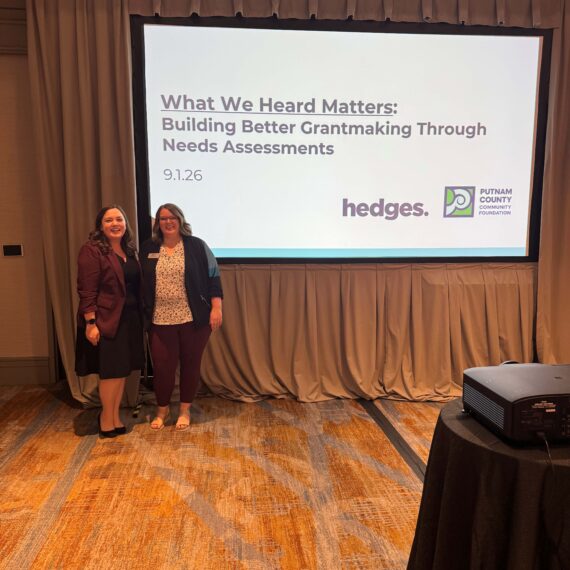
At this year’s Philanthropy Leads Conference, Hedges co-presented What We Heard Matters: Building Better Grantmaking Through Needs Assessments alongside The Putnam County Community Foundation. We shared what we’ve learned about designing a process that generates meaningful insights funders can put to use.
If your organization is considering a Nonprofit Needs Assessment, here are four tips to guide your work.
1. Start with a clear purpose.
There are many benefits to conducting a Nonprofit Needs Assessment. Before jumping in, determine your organization’s primary purpose for doing this work.
What do you hope to learn? What decisions will the findings help you make?
A defined purpose gives your team a way to evaluate choices throughout the process, from the questions you ask to how you share the findings.
2. Decide what you want to know, then who you need to hear from.
The information you’re seeking should guide which audiences you include in the research.
For example, if you want to understand nonprofit staff retention challenges in your community, include staff members and leadership teams. If you’re exploring board recruitment, you’ll likely want to hear from board leaders, newer board members, and nonprofit volunteers who haven’t yet joined a board.
Thinking through these connections early helps you reach people whose experiences can inform the questions you’re trying to answer.
3. Make participation inviting and accessible.
Be thoughtful about how and when you invite people to participate. Give them the information they need to understand the process and feel comfortable contributing.
Consider timing, ease of access, opportunities to participate on their own schedule or in person, and potential incentives. The facilitator can also influence how comfortable people feel sharing their experiences.
The goal is to make participation manageable and inviting for the people you want to hear from.
4. Make the findings easy to understand and use.
Even the best data has limited value if the people who need it can’t easily understand or use it.
Organize your findings in a format that helps your team reflect on what you heard, inform decisions, and return to the information over time. Consider what will also be useful to share with nonprofit stakeholders.
Keep your original purpose in view: Do the findings help your team answer the questions that prompted this work?
A tool to help you get started
We’ve created a tool with questions to help your team think through each stage of the process and build a Nonprofit Needs Assessment that fits your organization and community.
Download the Nonprofit Needs Assessment Key Questions Tool.
If you’re considering a Nonprofit Needs Assessment and would like a partner to help design and carry out the process, we’d love to talk. Contact Kara Harrison, Hedges Director of Capacity Building Services, at kara@hellohedges.com.