
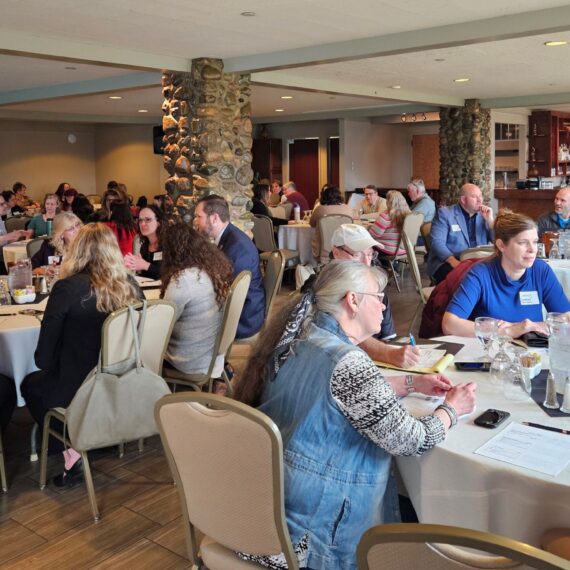
In a time when many nonprofits are navigating increasing demand, limited resources, and constant change, the Community Foundation of Greater Lafayette (CFGL) continues its deliberate and strategic approach to strengthen the organizations at the heart of its community.
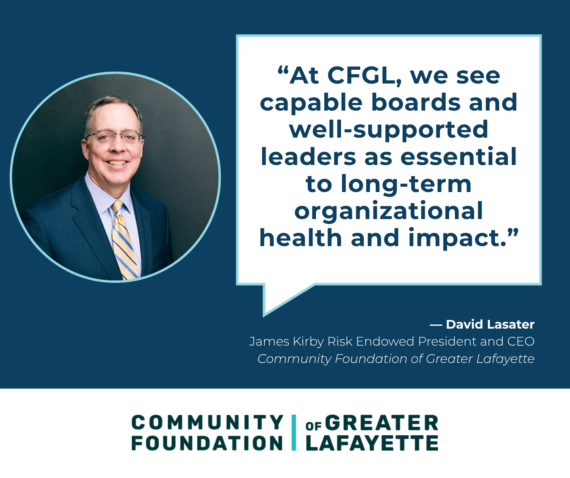
Under the leadership of David Lasater who serves as the James Kirby Risk Endowed President and CEO, the foundation is focused on this core belief: strong nonprofits require strong leadership and governance.
“At CFGL, we see capable boards and well-supported leaders as essential to long-term organizational health and impact,” Lasater explains.
A Coordinated Approach to Capacity Building
Rather than relying on one-off trainings or isolated investments, CFGL has built a coordinated set of initiatives designed to support nonprofit leaders and boards in practical, lasting ways.
A cornerstone of this work is the Douglas W. Eberle Not-for-Profit Board Governance Series, delivered in partnership with Hedges and supported by North Central Health Services, State Bank, and United Way of Greater Lafayette. This seven-part series equips nonprofit executives and board members with tools and guidance to strengthen board effectiveness—ensuring organizations are led with clarity, accountability, and purpose.
Complementing this effort, CFGL convenes a year-long leadership cohort for nonprofit executives, partnering with North Central Health Services, Duke Energy, and United Way of Greater Lafayette. Each year, six leaders engage in peer roundtables and individualized coaching with certified executive coaches—creating space for reflection, skill-building, and peer learning.
CFGL also expands access to high-quality fundraising and leadership training. Through partnerships with the Indiana University Lilly Family School of Philanthropy, nonprofit professionals can access subsidized coursework leading to a Certificate in Fundraising Management with training sessions offered in Lafayette. Additionally, scholarships—supported through a partnership with North Central Health Services—enable executive directors, supervisors, and emerging leaders to attend the Nonprofit Executive Leadership Program at Indiana University Indianapolis, strengthening skills in financial analysis, program evaluation, and strategic planning.
Together, these initiatives reflect a long-term investment in the people and practices that help nonprofits thrive.
Creating Space for Better Leadership
One of the most distinctive aspects of CFGL’s approach is its emphasis on creating time and space for leaders to think, reflect, and plan.
Lasater has observed that when nonprofit teams are given this space, the impact is immediate and meaningful.
“Decision-making improves,” he notes. “Instead of reacting to the ‘fire of the day,’ leaders can think strategically—anticipating challenges and aligning decisions with long-term goals.”
This intentional pause also leads to greater clarity across organizations. Teams better understand how their work connects to broader priorities, strengthening alignment and increasing buy-in. Over time, this shift transforms how organizations operate.
“As buy-in increases, employees tend to shift from being reactive to proactive. Rather than constantly moving from one crisis to the next, they become more intentional in their actions, which
reduces stress and creates a healthier, more sustainable pace of work.”
For Lasater, this belief is rooted in personal experience. Early in his career, he began setting aside dedicated time each week for reflection, learning, and connecting with staff—practices he continues today.
“I seldom allow that thinking time to be overridden,” he says. “It consistently leads to better decisions, stronger relationships, and a more focused and effective organization.”
Expanding the Definition of Philanthropy
At the heart of Lasater’s leadership is a broader vision of philanthropy. Drawing on Robert L. Payton’s definition, he emphasizes that philanthropy is “voluntary action for the public good.”
“It’s often associated with money, and that’s important,” Lasater reflects. “But philanthropy is much more than that. It’s about what each of us chooses to do—voluntarily—to make a difference.”
This perspective opens the door for everyone to participate.
“Anyone—everyone—can be a philanthropist,” he says.
According to Lasater, people can make a philanthropic impact and play a meaningful role in their communities through volunteering, supporting causes, and contributing time and energy.
Research reinforces this view, showing that giving and volunteering not only benefit communities, but also improve individual well-being by reducing stress and increasing happiness, confidence, and connection.
A Model for Community Leadership
Lasater notes that CFGL’s ability to invest thoughtfully in nonprofit leadership and governance is strengthened by the foundation’s own Board of Directors, whose guidance and long-term stewardship help shape the organization’s community impact.
Through its layered investments in governance, leadership, and learning, the Community Foundation of Greater Lafayette offers a compelling model for how foundations can lead.
By focusing on people, creating space for reflection, and building strong partnerships, CFGL is helping nonprofits move beyond short-term survival toward long-term effectiveness.
And in doing so, it is strengthening not just organizations, but the entire community they serve.